Pharma CRM Support Companies in Saudi Arabia
Pharmaceutical companies in Saudi Arabia are increasingly investing in customer relationship management (CRM) technology to improve healthcare professional engagement, manage pharmaceutical sales teams and strengthen commercial operations. As pharmaceutical manufacturers, distributors and international life sciences organisations expand their activities, managing customer information, medical representative visits, sales performance and commercial reporting becomes increasingly complex.
Traditional spreadsheets, disconnected applications and manual reporting processes can make it difficult for pharmaceutical businesses to maintain accurate customer records and monitor field team performance. Modern pharmaceutical CRM software provides a more structured way to manage these activities through centralised customer information, sales force automation, workflow management and business analytics.
However, selecting the right platform is only one part of the process. Pharmaceutical organisations also need reliable implementation, system integration, technical maintenance and ongoing support to ensure their CRM environment continues to meet business requirements.
This makes finding the right pharma CRM support companies in Saudi Arabia an important decision for pharmaceutical manufacturers, distributors and healthcare businesses.
From specialist pharmaceutical platforms such as Veeva CRM and IQVIA OCE to Salesforce-based enterprise solutions and regional CRM applications, organisations have several options to evaluate. Each platform offers different capabilities, implementation requirements and support models.
An experienced enterprise technology partner can help pharmaceutical companies assess their requirements, select appropriate CRM technologies, integrate existing applications and establish a reliable support environment.
This article explores pharmaceutical CRM solutions, CRM providers in Saudi Arabia, implementation considerations, technical support requirements and how BSS Universal supports enterprise CRM and digital transformation initiatives.
1. Why Pharmaceutical Companies in Saudi Arabia Need CRM Support
The pharmaceutical industry operates through complex commercial relationships involving healthcare professionals (HCPs), hospitals, clinics, pharmacies, distributors and institutional customers.
Pharmaceutical sales representatives regularly visit healthcare professionals, share approved product information, coordinate follow-ups and report field activities. Commercial managers must monitor these interactions while maintaining visibility into regional performance and sales objectives.
Without an appropriate CRM environment, organisations may encounter several operational problems.
Disconnected customer information
Customer details, visit histories, communication records and commercial information may be maintained across different systems.
Limited sales team visibility
Managers may struggle to understand representative activities, territory performance and customer engagement.
Manual reporting
Employees may spend considerable time consolidating sales reports, visit records and customer information.
Inefficient territory management
Without structured customer segmentation and visit planning, sales teams may find it difficult to prioritise important accounts.
Poor system integration
CRM applications may operate independently from ERP, inventory, distribution and business intelligence platforms.
Limited technical support
When systems experience configuration, integration or performance issues, business operations can be affected.
These challenges explain why pharmaceutical companies need more than CRM software. They require appropriate implementation, integration, training and ongoing technical support.
2. What Pharmaceutical CRM Software Should Include
Pharmaceutical CRM software is designed to help organisations manage commercial relationships, sales activities and customer engagement.
Unlike a basic contact management application, a pharmaceutical CRM environment may need to support specialised field-force workflows and industry-specific information requirements.
When evaluating pharmaceutical CRM software Saudi Arabia providers, companies should consider the following capabilities.
Healthcare Professional Relationship Management
A pharmaceutical CRM system should provide a structured way to manage healthcare professional information, including approved customer records, specialities, affiliations and interaction histories.
This helps commercial teams maintain consistent customer information and coordinate engagement activities.
Pharmaceutical Sales Force Automation
Pharma sales force automation Saudi Arabia requirements may include:
- Medical representative activity tracking.
- Customer visit planning.
- Territory management.
- Visit reporting.
- Call planning and approval.
- Sales performance monitoring.
- Customer segmentation.
- Managerial dashboards.
These capabilities help pharmaceutical organisations coordinate field teams and improve commercial visibility.
Customer Segmentation and Territory Management
Customer segmentation helps pharmaceutical businesses organise healthcare professionals and institutional accounts according to relevant commercial criteria.
Territory management allows organisations to allocate sales representatives, plan visits and monitor regional activities.
Sales and Distributor Data Integration
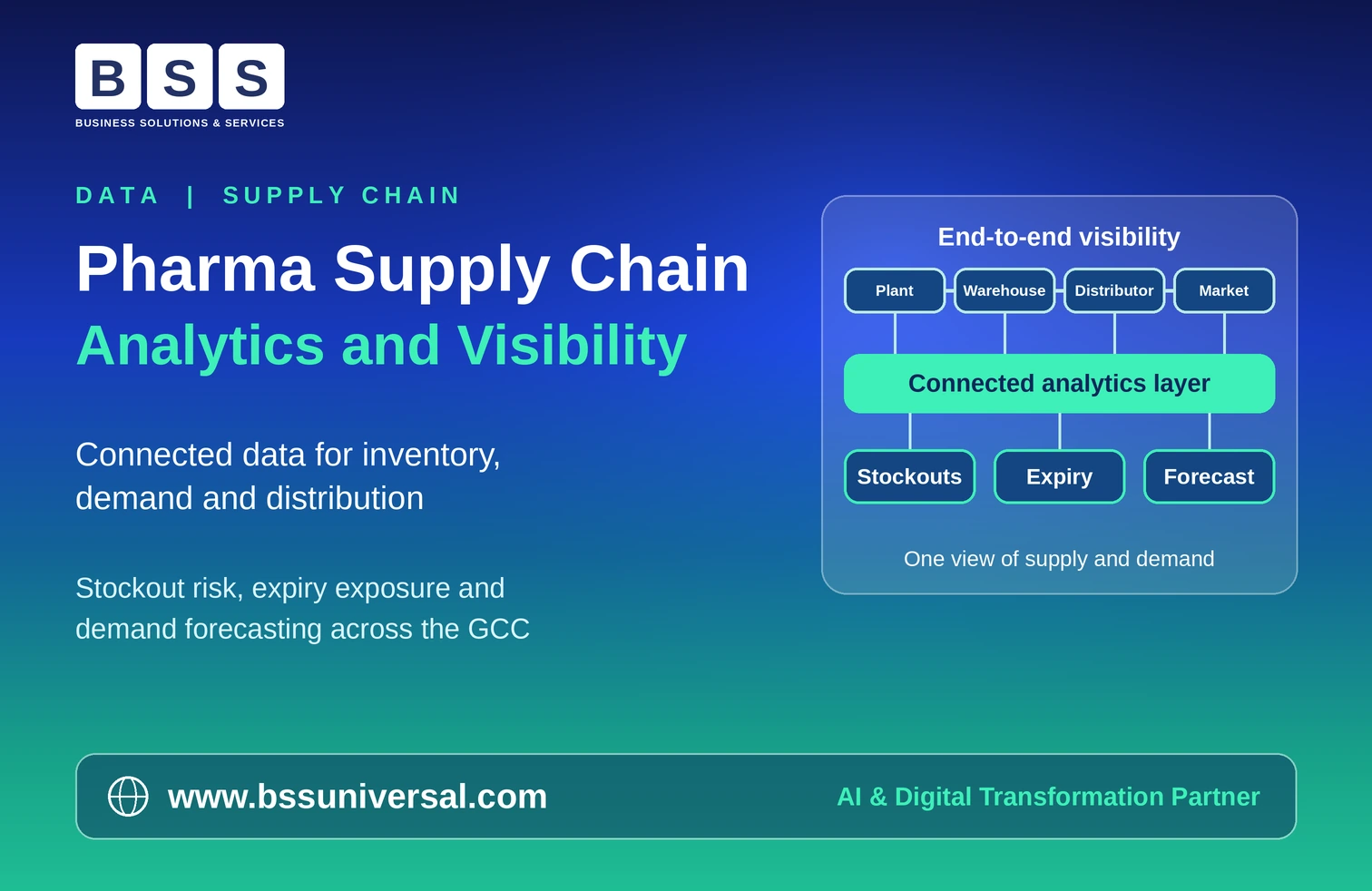
Pharmaceutical companies often need to connect CRM information with distributor sales, product availability and inventory data.
This integration can help commercial managers evaluate sales performance alongside relevant distribution information.
Reporting and Business Intelligence
CRM dashboards should provide useful information about customer engagement, representative activities, sales performance and territory coverage.
Integration with enterprise analytics platforms can provide additional reporting capabilities.
Mobile Access and Offline Functionality
Medical representatives frequently work outside traditional office environments.
A suitable mobile CRM application should be evaluated for usability, connectivity requirements, offline functionality, data synchronisation and device security.
Not every CRM platform provides identical offline capabilities, so organisations should test their actual field requirements before implementation.
3. Pharma CRM Solutions Available in Saudi Arabia
There is no single CRM platform that is automatically suitable for every pharmaceutical company.
The right choice depends on organisational size, commercial structure, number of representatives, data requirements, existing enterprise applications and implementation budget.
The following categories represent the main options pharmaceutical companies can evaluate.
Specialist Pharmaceutical CRM Platforms
Specialist pharmaceutical CRM platforms are designed around life sciences commercial processes.
Examples include:
Veeva CRM
Veeva provides CRM technology designed for the life sciences industry. Its broader platform capabilities support pharmaceutical commercial operations and customer engagement.
Companies evaluating Veeva CRM support Saudi Arabia should consider implementation requirements, platform configuration, data management, integration and the availability of appropriately qualified support resources.
IQVIA Orchestrated Customer Engagement (OCE)
IQVIA OCE is an enterprise customer engagement platform designed for life sciences organisations.
Its capabilities support coordinated commercial engagement across sales, marketing and related functions.
A historical example is APEX Pharma's announcement that it selected IQVIA OCE for its Egyptian market, with future plans to deploy it in Saudi Arabia. The announcement illustrates how pharmaceutical companies can use integrated customer engagement platforms to modernise commercial operations.
Organisations considering IQVIA should evaluate the current product offering, implementation model, licensing and support arrangements directly with the provider.
Salesforce CRM for Pharmaceutical Companies
Salesforce CRM for pharma companies is another option for organisations looking for configurable enterprise CRM capabilities.
Salesforce Life Sciences Cloud provides industry-focused capabilities that pharmaceutical and life sciences organisations can evaluate for customer engagement and connected commercial workflows.
A Salesforce-based environment may support:
- Customer relationship management.
- Commercial workflow configuration.
- Enterprise application integration.
- Customer information management.
- Reporting and analytics.
- Workflow automation.
- Connected business processes.
Companies should assess the required Salesforce products, licences, integrations and configuration before selecting an implementation model.
Regional Pharmaceutical CRM Applications
Regional applications may provide functionality specifically designed for pharmaceutical field teams.
For example, RepPharma markets a pharmaceutical CRM focused on field-force management, doctor databases, offline mobile access and visit planning.
Organisations evaluating regional platforms should independently verify database coverage, information accuracy, data licensing, security, offline functionality and support availability.
General Enterprise CRM Platforms
General CRM platforms may also support pharmaceutical commercial operations when appropriately configured.
Microsoft Dynamics 365, Zoho CRM and other enterprise applications can be evaluated according to business requirements and integration needs.
However, organisations should establish whether additional development or customisation is required for pharmaceutical workflows.
4. Pharma CRM Support Services: What Should a Provider Offer?
Selecting software without planning ongoing support can create operational problems after deployment.
Pharmaceutical organisations should evaluate whether a provider can support the full CRM lifecycle, from initial assessment to maintenance and continuous improvement.
The main pharmaceutical CRM support services include the following.
CRM Implementation and Configuration
Pharma CRM implementation services begin with understanding business processes and translating requirements into an appropriate system configuration.
Typical activities include:
- Business requirements assessment.
- CRM architecture planning.
- Workflow configuration.
- User role management.
- Customer data preparation.
- Dashboard configuration.
- Testing and deployment.
- Employee training.
CRM Technical Support
Pharmaceutical CRM support services should provide an organised approach to resolving technical issues.
Support requirements may include:
- Application troubleshooting.
- User access issues.
- Configuration problems.
- Mobile application support.
- Reporting errors.
- Data synchronisation issues.
- Performance monitoring.
- System maintenance.
CRM Integration Services
Pharma CRM integration services connect customer relationship management applications with other enterprise systems.
For example, pharmaceutical companies may need to connect CRM with:
- ERP applications.
- Distributor management systems.
- Inventory platforms.
- Marketing applications.
- Business intelligence environments.
- Enterprise data warehouses.
- Customer communication platforms.
A properly designed integration environment can reduce manual information transfer and improve reporting consistency.
Data Migration and Management
When replacing an existing CRM platform, organisations need to migrate customer information, interaction histories and relevant commercial records.
Data migration should include appropriate validation, mapping, duplicate identification and access controls.
Ongoing CRM Support and Optimisation
CRM environments require continuous attention as business processes, user requirements and integration dependencies change.
A support arrangement should define response times, escalation procedures, system maintenance responsibilities and service coverage.
5. CRM Companies in Saudi Arabia: Providers and Market Options
The Saudi CRM market includes international software platforms, local technology providers, enterprise implementation partners and specialist industry applications.
Companies searching for CRM companies in Saudi Arabia should understand that these providers do not all offer the same services.
Some develop CRM products, others implement third-party platforms, while specialist providers focus on pharmaceutical workflows.
Examples of CRM Providers and Technology Companies
The following organisations appeared in the supplied business-directory research for CRM, ERP or related technology services in Saudi Arabia.
They represent potential market research starting points, not a verified ranking of pharmaceutical CRM specialists.
CompanyLocation / market presenceDirectory-described focusSotam CRMRiyadhCRM software and customer managementResoosSaudi ArabiaERP with CRM functionalitySolution Founder Information Technologies GlobalJeddahCRM and ERP technology servicesPioneers ITJeddahMicrosoft Dynamics 365 CRM consulting and supportJuleb – Digital Pharma CompanyJeddahPharmaceutical ERP and software solutionsArabian SoftwareRiyadhZoho implementation and customisationArabian Daem for IT ServicesRiyadhERP implementation and IT servicesSEIDOR Middle EastRiyadhSAP and enterprise customer experience solutions
Before including any provider in a final procurement shortlist, pharmaceutical organisations should verify its current services, product expertise, Saudi presence, implementation references and technical support arrangements.
In particular, a company offering general CRM services should not automatically be considered a specialist pharmaceutical CRM provider.
CRM Providers Saudi Arabia: Understanding the Different Categories
When comparing CRM providers Saudi Arabia, organisations should distinguish between:
CRM software developers: Companies that own or develop CRM products.
CRM implementation partners: Companies that configure and deploy platforms such as Salesforce, Microsoft Dynamics or Zoho.
CRM consulting companies: Organisations that assess requirements, design CRM architecture and recommend suitable technologies.
CRM technical support providers: Companies that maintain, troubleshoot and optimise existing CRM environments.
Specialist pharmaceutical CRM providers: Companies offering platforms or services specifically designed for pharmaceutical commercial operations.
This distinction helps pharmaceutical procurement teams identify providers that match their actual requirements.
6. CRM Implementation Companies Saudi Arabia: How to Evaluate Them
Selecting CRM implementation companies Saudi Arabia requires a structured evaluation process.
The right partner should understand enterprise technology requirements and be capable of delivering a solution that integrates with the organisation's existing systems.
Consider the following criteria.
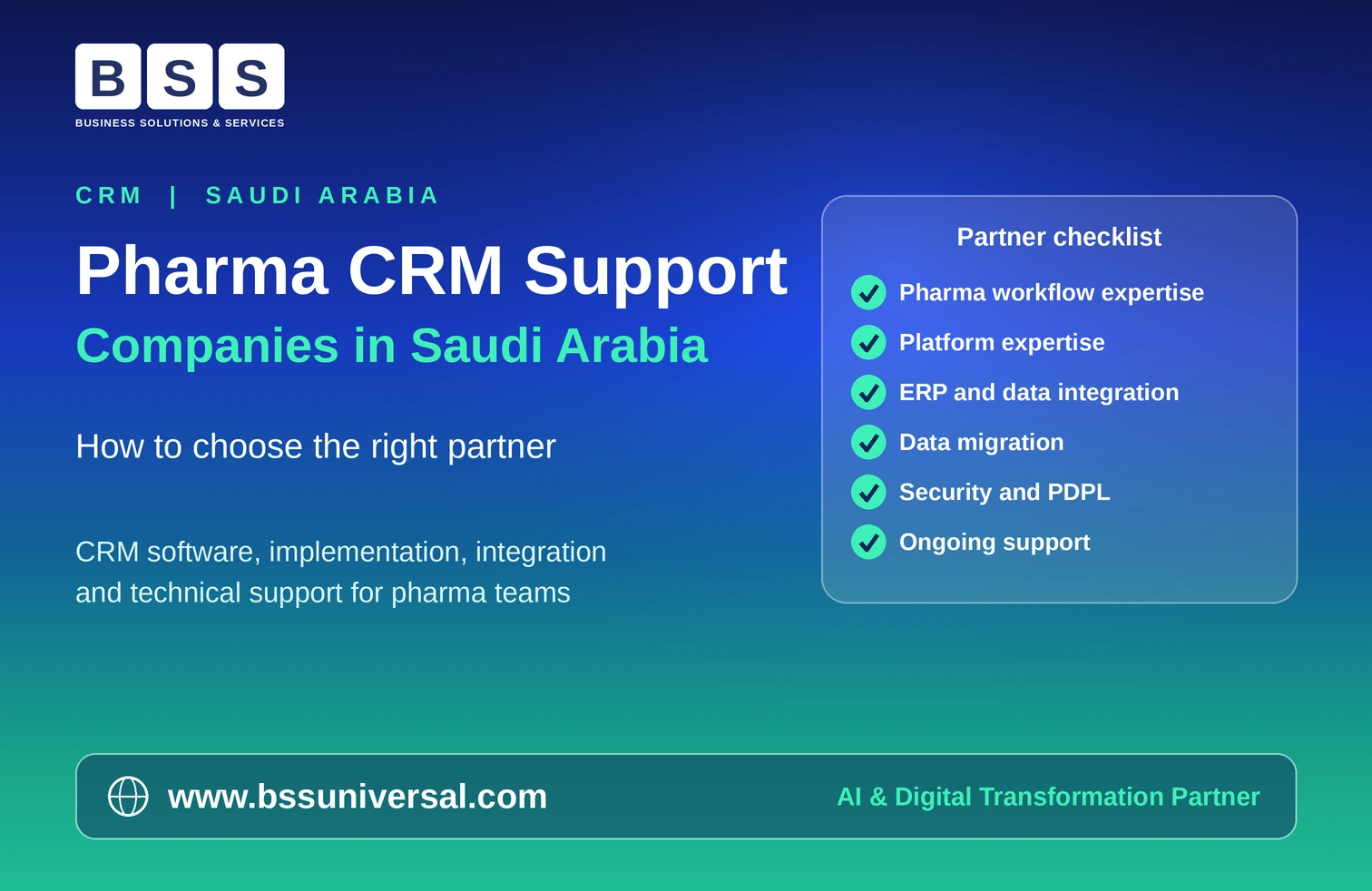
Industry and Business Process Understanding
Does the provider understand pharmaceutical commercial operations, medical representative workflows, customer engagement and territory management?
Platform Expertise
Can the company implement and configure the CRM platform selected by your organisation?
Integration Capabilities
Can it connect CRM with ERP, inventory, analytics and other enterprise applications?
Data Migration Experience
Does the provider have a structured process for transferring, validating and securing existing customer information?
Security and Governance
Can the company address access permissions, information security, data privacy and applicable Saudi regulatory requirements?
Post-Implementation Support
Does it provide ongoing technical support, maintenance, troubleshooting and system optimisation?
Business Alignment
Can the provider connect technology implementation with measurable commercial and operational objectives?
7. CRM Consulting Companies Saudi Arabia: Important Questions to Ask
Before selecting CRM consulting companies Saudi Arabia, pharmaceutical organisations should ask practical questions about implementation and long-term support.
QuestionWhy it mattersHave you implemented enterprise CRM platforms?Establishes implementation experienceDo you understand pharmaceutical workflows?Evaluates industry relevanceCan you integrate CRM with our ERP?Identifies integration capabilityHow will existing customer data be migrated?Reduces migration risksWhat support services are included?Clarifies ongoing responsibilitiesHow are technical issues escalated?Establishes support accountabilityCan the solution scale across multiple regions?Evaluates future readinessHow are data security and access managed?Addresses governance requirements
These questions are particularly important for international pharma companies Saudi Arabia that need to coordinate commercial operations across different countries and business units.
8. Best CRM Companies in Saudi Arabia: How to Compare Providers
Searching for the best CRM companies in Saudi Arabia should not be based entirely on company size, brand recognition or software popularity.
The best provider is the one whose capabilities match the organisation's business and technical requirements.
The following comparison framework can help pharmaceutical procurement teams evaluate enterprise CRM solutions Saudi Arabia.
Evaluation factorWhat to comparePharmaceutical functionalityHCP management, field visits and sales workflowsPlatform flexibilityConfiguration and customisation optionsIntegrationERP, distributor and analytics connectivityMobile capabilitiesField usability and offline accessData managementMigration, validation and customer recordsSecurityAccess controls and data protectionImplementationProject planning, testing and deploymentTechnical supportMaintenance and issue resolutionScalabilitySupport for growing teams and locationsTotal costLicensing, implementation and support
Cloud CRM Providers Saudi Arabia
Cloud CRM providers Saudi Arabia can offer scalable application environments without requiring organisations to manage every aspect of their underlying infrastructure.
However, pharmaceutical companies should evaluate cloud hosting, service availability, data processing arrangements, security controls, integration requirements and applicable regulatory obligations.
The choice between cloud-hosted and other deployment models should depend on business requirements rather than assuming that one approach is suitable for every organisation.
9. Pharmaceutical Companies in Saudi Arabia: Who Needs CRM Support?
The need for pharmaceutical CRM technology extends across different types of organisations.
Pharmaceutical Manufacturers
Pharma manufacturers Saudi Arabia need to coordinate commercial teams, manage healthcare professional relationships and monitor product performance.
Larger manufacturers may require integration between CRM, ERP, distributor data and enterprise analytics.
Pharmaceutical Distributors
Pharmaceutical distributors Saudi Arabia often manage complex relationships with manufacturers, pharmacies, hospitals and healthcare institutions.
CRM integration can help improve customer information management and commercial reporting.
Local and International Pharmaceutical Organisations
Pharmaceutical companies in Saudi Arabia include local manufacturers, regional distributors and international life sciences organisations.
Top pharmaceutical companies Saudi Arabia and the largest pharma companies in Saudi Arabia may have more complex enterprise requirements involving multiple business units, field teams and integration environments.
International organisations may also need to align Saudi CRM operations with wider global technology architecture and information governance policies.
Regional Pharmaceutical Markets
Pharmaceutical industry companies Riyadh may need to manage commercial operations across the capital and other major markets.
Similarly, pharma companies in Jeddah and pharmaceutical companies in Dammam may require CRM environments that support regional sales teams, customer engagement and distribution relationships.
Organisations should evaluate territory coverage and reporting requirements based on their actual business footprint.
10. AI and Digital Transformation in Pharmaceutical CRM
Modern CRM platforms increasingly incorporate analytics, automation and AI-assisted capabilities.
AI solutions for pharmaceutical companies can help organisations analyse commercial information and improve business decision-making.
Potential applications include:
- Customer segmentation and prioritisation.
- Commercial performance analysis.
- Sales forecasting.
- Territory performance monitoring.
- Automated reporting assistance.
- Customer engagement insights.
- Workflow recommendations.
AI automation for pharma companies can also help reduce repetitive administrative activities.
For example, an integrated CRM environment may provide commercial managers with consolidated information about customer engagement, sales activity and regional performance.
However, AI-generated recommendations should be evaluated for accuracy, data quality, appropriate permissions and human oversight.
AI Consulting Pharma Saudi Arabia
AI consulting pharma Saudi Arabia initiatives should begin with understanding existing systems and business requirements.
Organisations should assess whether CRM data is reliable, whether enterprise applications are integrated and whether the required infrastructure can support AI applications.
Pharmaceutical digital transformation Saudi Arabia should connect CRM modernisation with data engineering, analytics, cloud architecture and responsible AI adoption.
11. Salesforce and Pharmaceutical CRM Support in Saudi Arabia
Salesforce is an important consideration for pharmaceutical companies exploring enterprise CRM modernisation.
Salesforce consulting Saudi Arabia requirements may include business process assessment, platform configuration, integration planning and implementation.
Salesforce Life Sciences Cloud Saudi Arabia is another area that organisations can evaluate when considering industry-focused CRM capabilities.
Salesforce Implementation Saudi Arabia
Salesforce implementation Saudi Arabia projects may include:
- Requirements assessment.
- CRM architecture design.
- Platform configuration.
- Customer data migration.
- API-based integration.
- Dashboard development.
- User acceptance testing.
- Deployment and training.
Salesforce Support Services Saudi Arabia
After implementation, organisations may require Salesforce support services Saudi Arabia to address configuration changes, integration maintenance, application issues and user requirements.
The selected support partner should clearly define service scope, responsibilities, escalation procedures and response expectations.
Pharmaceutical organisations should also verify the provider's relevant Salesforce qualifications and product-specific experience before engagement.
12. Cloud and Pharmaceutical IT Support in Saudi Arabia
CRM is only one component of an enterprise technology environment.
Pharmaceutical companies also depend on cloud infrastructure, databases, application integrations and secure information systems.
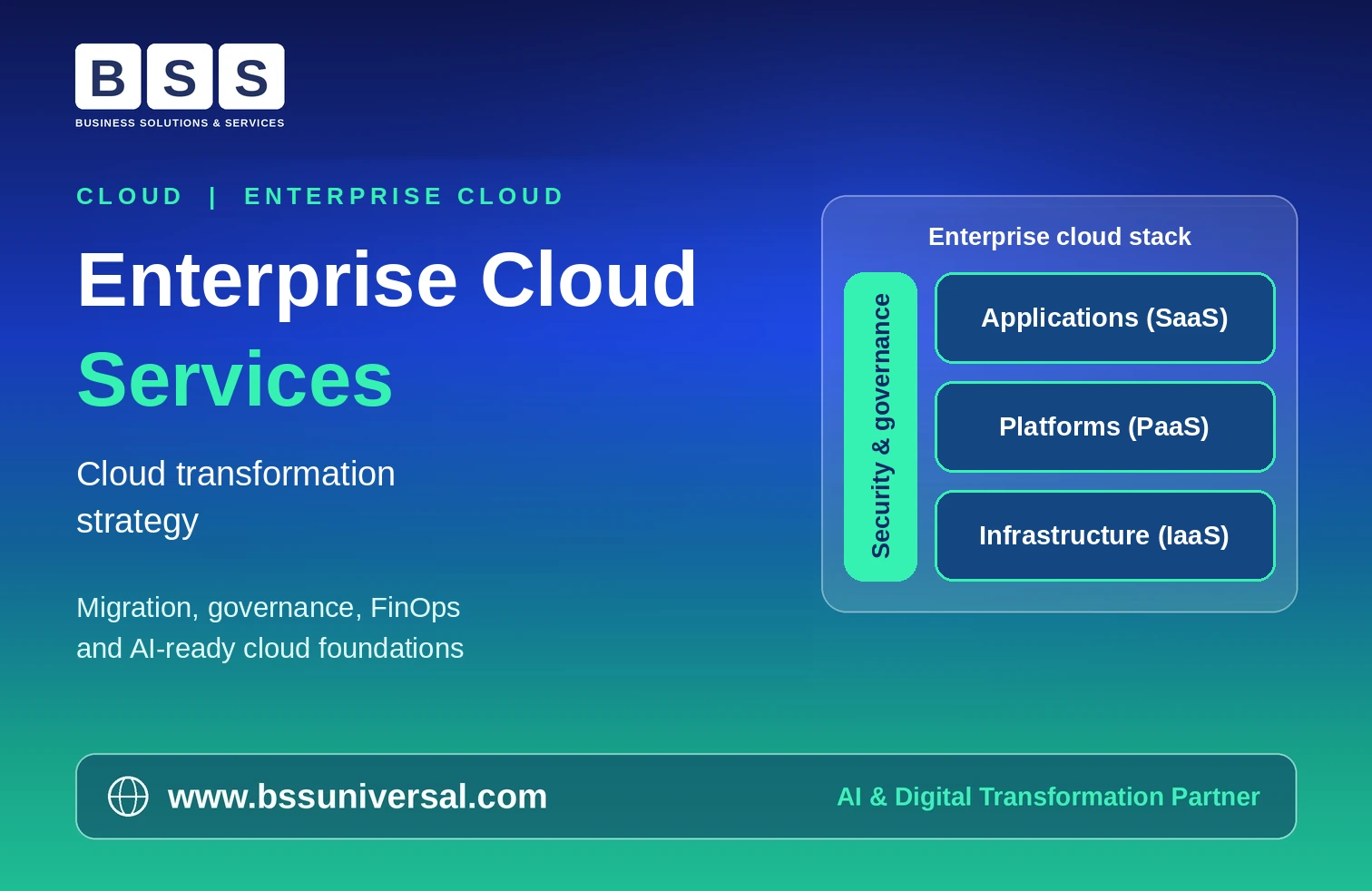
Cloud support services Saudi Arabia can help organisations maintain the underlying technology environments that support their CRM applications.
Cloud Solutions for Pharmaceutical Companies
Cloud solutions for pharmaceutical companies may support CRM hosting, enterprise applications, data processing, analytics and AI workloads.
Cloud architecture should account for application dependencies, security, scalability and data protection requirements.
Managed Cloud Services Saudi Arabia
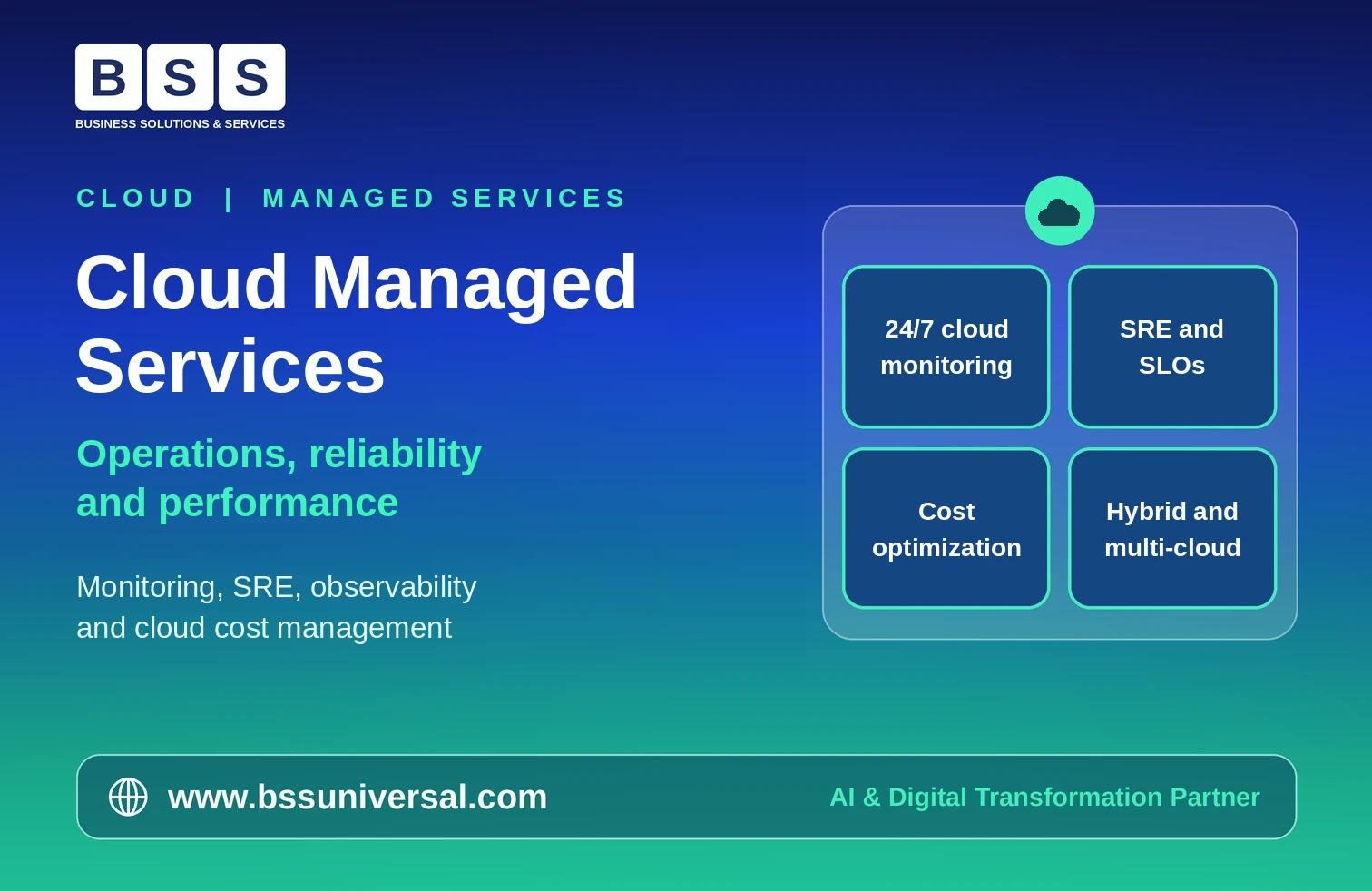
Managed cloud services Saudi Arabia can provide ongoing infrastructure monitoring, operational management, backup and technical support.
These services can be particularly useful when CRM applications are integrated with multiple enterprise systems.
Pharmaceutical IT Support Saudi Arabia
Pharmaceutical IT support Saudi Arabia requirements may include:
- CRM and ERP troubleshooting.
- Enterprise application maintenance.
- Cloud infrastructure support.
- Database administration.
- System integration maintenance.
- User access management.
- Data backup and recovery.
- Application performance monitoring.
An integrated support model can help pharmaceutical businesses maintain reliable technology operations.
13. How BSS Universal Supports Enterprise CRM and Digital Transformation
BSS Universal helps organisations modernise enterprise technology environments through capabilities across CRM, data engineering, analytics, AI, cloud architecture and custom development.
With its regional headquarters in Riyadh, Saudi Arabia, BSS provides a regional point of contact for organisations exploring enterprise technology initiatives.
For pharmaceutical manufacturers, distributors and international life sciences businesses, BSS capabilities can support the underlying technology requirements of commercial transformation.
CRM Implementation and Consulting
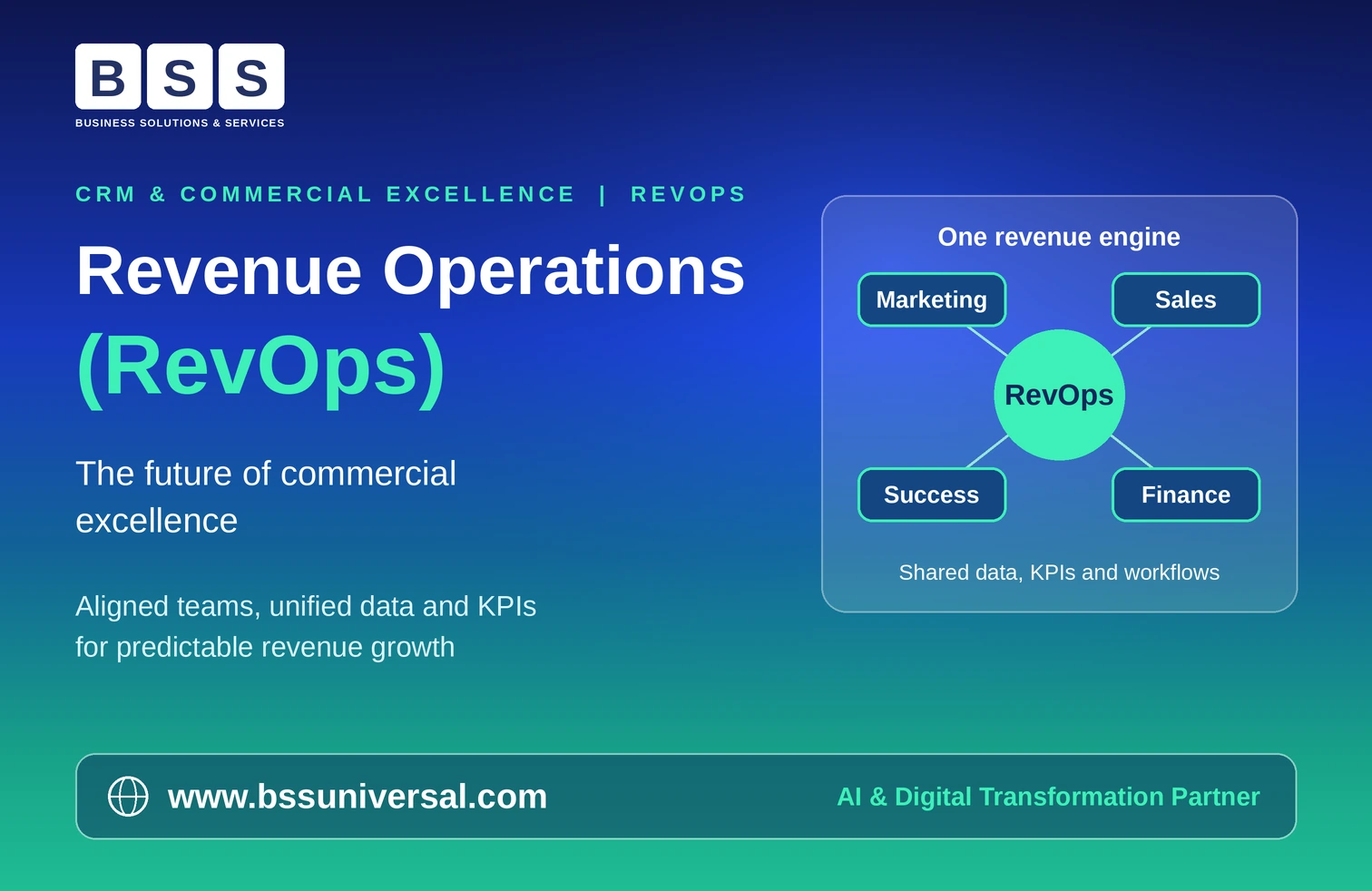
BSS provides CRM implementation and commercial excellence capabilities to help organisations improve customer relationship management and enterprise workflows.
Relevant activities may include:
- Business requirements assessment.
- CRM implementation planning.
- Workflow configuration.
- Customer data management.
- Enterprise application integration.
- Reporting and dashboard requirements.
- Commercial process optimisation.
Organisations evaluating CRM consulting and implementation can discuss their existing platforms and required support scope with the BSS team.
CRM Integration and Enterprise Data Engineering
Pharmaceutical organisations often maintain customer, product, sales and distribution information across different systems.
BSS data engineering capabilities can support enterprise data integration, data management and analytics readiness.
This can help organisations establish more connected information environments and improve access to business reporting.
Business Intelligence and Analytics
BSS provides business intelligence and data visualisation capabilities that can support management reporting and commercial decision-making.
Potential pharmaceutical applications include:
- Regional sales performance dashboards.
- Product-level business reporting.
- Commercial activity monitoring.
- Customer engagement analysis.
- Consolidated management reporting.
AI Transformation Readiness
BSS supports enterprise AI transformation readiness by helping organisations evaluate business requirements, data foundations and technology opportunities.
For pharmaceutical organisations, these capabilities can help identify potential applications for commercial analytics, intelligent reporting and workflow automation.
Cloud Architecture and Custom Development
BSS offers cloud architecture advisory and custom development capabilities to help organisations modernise their technology environments.
These services can support CRM integration, cloud-based application environments and enterprise technology modernisation.
Ongoing Enterprise Technology Support
CRM and enterprise applications require ongoing attention after deployment.
BSS's broader technology capabilities can support organisations planning application integration, technical improvements, data infrastructure and managed technology services.
The specific support scope should be agreed according to the platform, project requirements and service arrangements.
Why Consider BSS Universal?
BSS Universal brings together multiple enterprise technology capabilities within a connected transformation approach.
Its reported organisational credentials include:
- More than 30 years of experience.
- Over 70 clients.
- More than 200 certified engineers.
- A delivery footprint spanning over 70 countries.
- ISO 27001 certification.
For pharmaceutical organisations, this combination of CRM, data, analytics, AI and cloud capabilities can help connect technology initiatives with broader enterprise requirements.
BSS focuses on enterprise digital transformation rather than positioning itself as a standalone pharmaceutical CRM software vendor.
14. How to Select the Right Pharma CRM Support Company
Before choosing a provider, pharmaceutical organisations should complete a structured assessment.
Define your CRM requirements
Identify whether your organisation needs a new pharmaceutical CRM, support for an existing system, integration, migration or platform optimisation.
Evaluate pharmaceutical workflows
Review customer management, medical representative activities, visit planning, territory management and commercial reporting.
Assess existing systems
Identify the CRM, ERP, distributor, analytics and cloud platforms that need to work together.
Compare implementation and support capabilities
Evaluate providers according to relevant experience, technical expertise, service scope and support availability.
Review security and compliance
Consider Saudi Arabia's Personal Data Protection Law (PDPL), access controls, data processing responsibilities and applicable industry requirements.
Calculate total cost of ownership
Include software licensing, implementation, integration, customisation, training, support and ongoing maintenance.
Plan for future growth
Select an approach that can accommodate additional representatives, territories, departments and business applications.
A structured evaluation can help organisations avoid unsuitable software investments and identify a technology partner capable of supporting long-term business requirements.
Conclusion: Finding the Right Pharma CRM Support Companies in Saudi Arabia
Pharmaceutical companies in Saudi Arabia need reliable technology environments to manage customer relationships, coordinate medical representatives, improve commercial reporting and integrate enterprise applications.
Choosing pharmaceutical CRM software is only the first step. Successful implementation also requires data migration, system integration, employee adoption, security controls and ongoing technical support.
Whether an organisation is evaluating Veeva CRM, IQVIA OCE, Salesforce Life Sciences Cloud or another enterprise CRM platform, its decision should be based on actual business requirements and the provider's implementation and support capabilities.
The right CRM environment can help pharmaceutical businesses establish more connected commercial operations and improve access to reliable business information.
BSS Universal supports enterprise transformation through CRM implementation, data engineering, business intelligence, analytics, AI readiness, cloud architecture and custom development.
Looking for a technology partner for pharmaceutical CRM implementation, integration or enterprise support in Saudi Arabia?
Connect with BSS Universal to discuss your CRM requirements, assess your existing enterprise systems and identify an appropriate technology implementation and support strategy.
BSS Universal
Website: https://bssuniversal.com/
Email: businessops@bssuniversal.com
Regional Headquarters: Riyadh, Saudi Arabia
Frequently Asked Questions
1. What are the best pharma CRM support companies in Saudi Arabia?
The right provider depends on the pharmaceutical company's platform, business requirements and support needs. Organisations can evaluate specialist pharmaceutical CRM vendors, enterprise CRM implementation partners and regional technology providers. Important criteria include pharmaceutical workflow expertise, integration capabilities, technical support and data governance.
2. Which pharmaceutical CRM software is available in Saudi Arabia?
Pharmaceutical companies can evaluate platforms such as Veeva CRM, IQVIA OCE, Salesforce-based solutions and regional pharmaceutical CRM applications. The appropriate choice depends on organisational size, commercial workflows, data requirements and implementation needs.
3. What is the difference between general CRM and pharmaceutical CRM?
General CRM platforms manage customer relationships across different industries. Pharmaceutical CRM solutions may include specialised capabilities such as healthcare professional management, medical representative visit planning, territory management, pharmaceutical sales force automation and commercial engagement workflows.
4. How much does pharma CRM implementation cost in Saudi Arabia?
Costs depend on software licensing, the number of users, implementation complexity, data migration, customisation, integrations, training and ongoing support. Organisations should request a detailed project estimate that separates licensing and implementation from recurring support costs.
5. Why do pharmaceutical companies need CRM technical support?
Technical support helps maintain system availability, resolve application problems, manage integrations, address data synchronisation issues and accommodate changing business requirements.
6. What should companies look for in pharmaceutical CRM support services?
Companies should evaluate pharmaceutical workflow understanding, platform expertise, integration capabilities, data migration, information security, troubleshooting procedures and ongoing maintenance arrangements.
7. Can Salesforce be used by pharmaceutical companies in Saudi Arabia?
Yes. Pharmaceutical organisations can evaluate Salesforce CRM and Salesforce Life Sciences Cloud according to their commercial requirements. Implementation may involve platform configuration, data migration, enterprise integration and user training.
8. What is Veeva CRM used for?
Veeva CRM is designed for life sciences commercial operations. Pharmaceutical companies can evaluate its customer engagement, commercial workflow and related capabilities according to their requirements and current product offering.
9. What is IQVIA OCE?
IQVIA Orchestrated Customer Engagement is an enterprise customer engagement platform for life sciences organisations. It supports coordinated commercial activities and customer engagement workflows.
10. Can pharmaceutical CRM integrate with ERP systems?
Yes. CRM can be integrated with ERP, inventory, distribution, analytics and other enterprise applications through appropriate APIs and integration architecture. This can improve information consistency and reduce manual reporting.
11. Are there local CRM companies in Riyadh and Jeddah?
Yes. The Saudi market includes local CRM and ERP technology providers, implementation companies and international enterprise technology firms with regional operations. Organisations should verify their platform expertise and pharmaceutical industry experience before selecting a provider.
12. Does BSS Universal provide pharmaceutical CRM software?
BSS Universal focuses on enterprise CRM implementation and digital transformation capabilities rather than marketing a proprietary pharmaceutical CRM product. Its services across CRM, data engineering, analytics, cloud and custom development can support organisations planning enterprise CRM initiatives.
13. Can BSS Universal support CRM integration and ongoing enterprise technology requirements?
BSS Universal provides enterprise technology capabilities across CRM, data engineering, analytics, cloud architecture and custom development. Organisations can discuss their existing platform, integration requirements and proposed support scope with its team.